Yes, you can grow chillies outside in the UK and get a real harvest, but only if you pick the right varieties and get your timing spot on. If you’re also wondering Yes, you can grow chillies outside in the UK and get a real harvest, but only if you pick the right varieties and get your timing spot on. If you’re also wondering can you grow venus fly traps in the uk, it follows similar rules around timing and picking the right conditions. Most chilli failures outdoors come down to two things: starting too late and choosing varieties that simply need more warm days than a British summer can reliably deliver. Get those two things right and you are in business, even in a cooler part of the country. can you grow jerusalem artichokes in the uk, it follows similar rules around timing and picking the right conditions. Most chilli failures outdoors come down to two things: starting too late and choosing varieties that simply need more warm days than a British summer can reliably deliver. Get those two things right and you are in business, even in a cooler part of the country.
Best Chillies to Grow Outside in the UK: Varieties and Tips
How to tell if a chilli is truly 'UK-outdoor' suitable
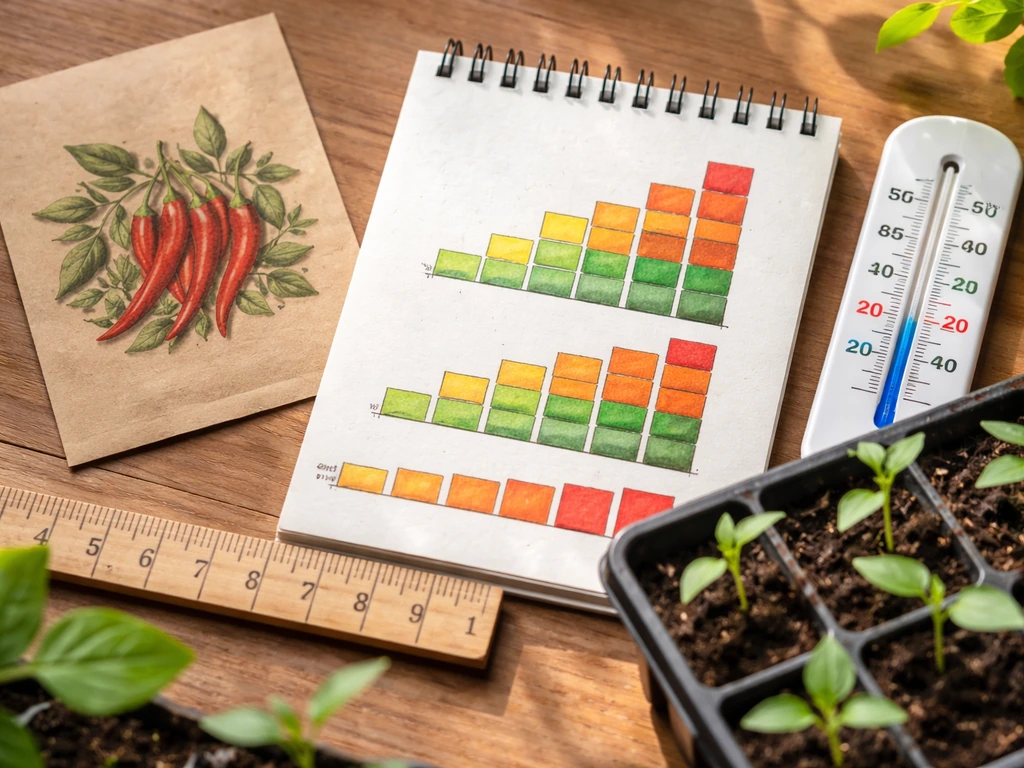
The single most important number to look at when choosing a chilli for outdoor UK growing is days to maturity. If a variety needs 100 days or more of warm conditions after transplanting to ripen fruit, you are gambling heavily on the weather. The UK outdoor season where night temperatures stay reliably above 12°C (54°F) typically runs from late May to mid-September at best, and considerably shorter in Scotland or the North. Aim for varieties that can reach full colour in 60 to 80 days from transplanting outdoors, and you have a genuine safety margin.
Beyond maturity time, look at fruit size. Small, thin-walled fruits ripen weeks faster than large, thick-walled ones. This is why compact ornamental chillies and small cayenne types consistently outperform big sweet peppers or large-fruited hot types outdoors in the UK. Compact plant habit matters too, because a bushy, lower-growing plant is far easier to protect with fleece or a cloche when a cold snap arrives in August, and it sits better in a sheltered sunny corner than a tall, top-heavy one.
Heat level is also indirectly relevant here. Super-hot varieties like Carolina Reapers, 7 Pot types, or Chocolate Bhutlahs need extremely long warm seasons, sometimes 150 days or more from sowing to ripe fruit. Outdoors in the UK, these are close to a lost cause unless you are in a very warm microclimate in the South and you started seeds in January. Mild to medium chillies with small to medium fruits are simply better suited to British outdoor conditions. That said, varieties like 'Quickfire' at around 35,000 SHU show you can still get real heat from a genuinely early-maturing type.
One useful shortcut is to look for RHS Award of Garden Merit (AGM) varieties. The RHS trials these under UK conditions specifically, and an AGM is a reasonable signal of robustness and consistent performance. It is not a guarantee of outdoor success, but AGM chillies have at least been tested and observed in real British growing environments rather than just catalogued on paper.
What to avoid
- Long-season super-hots: Carolina Reaper, Trinidad Moruga Scorpion, 7 Pot varieties. These simply need more warm days than most UK outdoor seasons provide.
- Large-fruited varieties like 'Ancho' types or full-size bell pepper hybrids. The thick walls take too long to ripen in cooler, wetter conditions.
- Buying young plants in June and expecting them to ripen by September outdoors. That is often not enough time, especially outside the South.
- Planting directly into exposed, north-facing, or wind-blasted spots. Chillies will sulk, drop flowers, and rarely ripen.
Best chillies for outdoor UK growing (maturity-first recommendations)
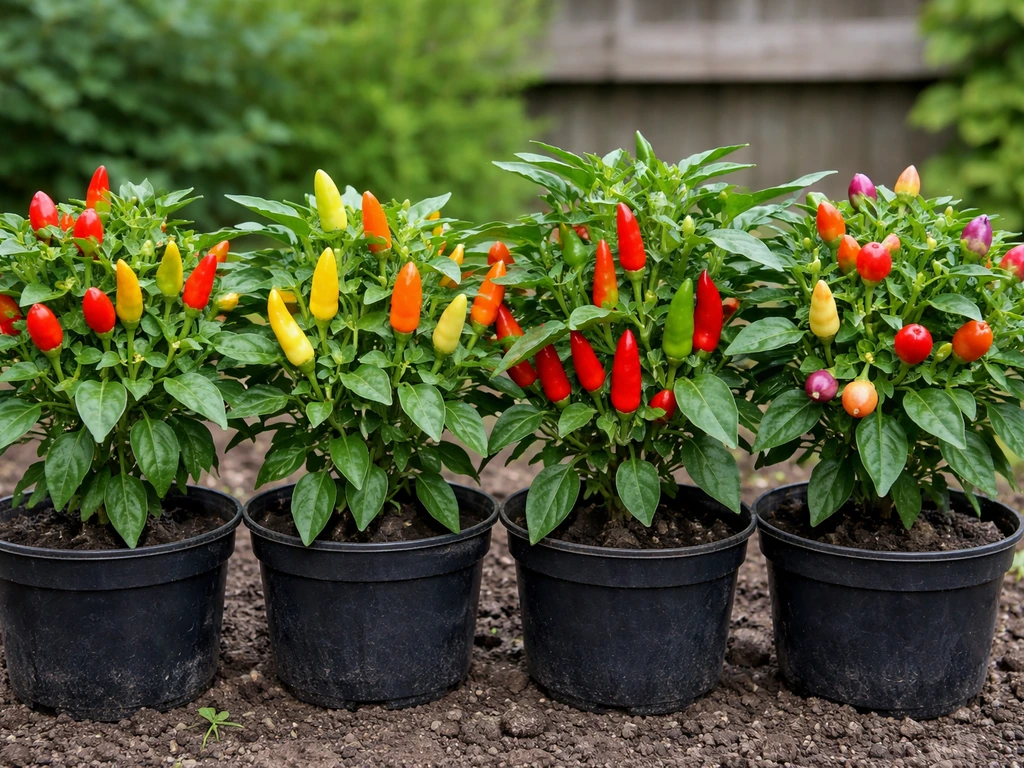
These are the types that consistently give outdoor results in the UK. The common thread is early maturity, small to medium fruit, and a compact or manageable habit.
| Variety | Maturity (from sowing) | Heat (SHU) | Fruit size | Best for outdoors |
|---|---|---|---|---|
| Quickfire F1 | ~65 days (extra early) | ~35,000 | Small, upward-pointing | Top pick for short seasons; crops for 3+ months if picked regularly |
| Basket of Fire F1 | 90–100 days | Moderate-hot | Small, ornamental, mixed colours | Compact/semi-trailing; containers and borders |
| Prairie Fire | ~80–90 days | ~70,000 | Tiny, upward-pointing | Very compact; excellent in pots in a sunny spot |
| Apache F1 | ~80 days | ~70,000–80,000 | Small | RHS AGM; reliable outdoors in sheltered spots |
| Cayenne (standard) | ~80–90 days | ~30,000–50,000 | Medium, thin-walled | Good for southern gardens with a warm wall |
| Fiesta F1 | ~75–80 days | Mild | Small, ornamental | Very early colour change; great for beginners outdoors |
| Ring of Fire | ~75–80 days | ~70,000 | Small cayenne-type | Early ripening; thin walls ripen quickly |
Quickfire F1 is probably the single strongest recommendation for outdoor UK growing right now. Tozer lists it as 'very early' with a maturity of 65 days from sowing, and plants continue to crop for at least three months if you pick regularly. That combination of speed and productivity is almost purpose-built for a British summer. Apache F1 holds an RHS AGM and is widely available as young plants in spring, making it a good fallback if you have missed the early sowing window. Basket of Fire is worth considering if you want something ornamental that also works in a hanging basket or container on a warm patio.
If you are in Scotland, the North of England, or anywhere with genuinely cool summers, stick to Quickfire, Prairie Fire, or Fiesta and grow them in containers you can move under cover on cold nights. In the Midlands and Wales, Apache, Cayenne, and Ring of Fire are realistic with a sheltered spot. On the South Coast or in a warm urban garden, you have slightly more flexibility and could try a medium-season cayenne or a hotter Thai-type in a particularly warm year.
When to sow and transplant outside: UK timing calendar
Early sowing is genuinely the secret to outdoor chilli success in the UK. The RHS and most experienced growers say the same thing: start your seeds as early as you can give them the right germination conditions, ideally between mid-January and early March. This sounds extreme but it is necessary because chillies need a long, warm run-up to produce ripe fruit within the window the UK outdoor season actually provides.
Seeds need 18–25°C (64–77°F) to germinate reliably, which means a heated propagator is pretty much essential at this time of year. Germination takes around 7 to 10 days in good conditions. After germination, grow seedlings on in a warm, bright spot indoors (a windowsill propagator is fine) until the risk of cold nights outdoors has passed.
- January to early March: Sow seeds in a heated propagator at 18–25°C. This gives the longest possible growing season.
- March to April: Pot on seedlings into individual small pots, keep on a warm bright windowsill or in a heated greenhouse.
- Late April: Thompson & Morgan note sowing is still viable up to end of April for a crop, but only with very early-maturing varieties like Quickfire.
- Late May to early June: Begin hardening off. Put plants outside during the day (ideally in a cold frame or sheltered spot) and bring them in at night for two weeks.
- Early June (after last frost): Transplant outdoors into their final position once nights are reliably above 10–12°C. In Scotland and northern England, wait until mid-June.
- July to August: Main flowering and fruiting period outdoors.
- August to October: Harvest window. Green fruits can be picked from August; red/ripe fruits from late August onwards depending on variety and season.
If you have missed the early sowing window entirely, buying young plants from a garden centre or nursery in May is a legitimate shortcut. The RHS notes that many retailers sell young chilli plants in spring and early summer. Just make sure you buy the earliest-maturing varieties available, not whatever happens to be on the shelf.
Where to grow them: site choice, soil, spacing, and microclimates
The single best outdoor spot for chillies in the UK is a south-facing wall or fence that acts as a heat sink. Stone and brick walls absorb heat during the day and release it at night, keeping the local temperature a degree or two warmer than an open plot. That marginal warmth is genuinely significant when you are trying to ripen chillies in a cool September. Look for a spot that gets 6 to 8 hours of direct sun daily and is sheltered from wind. Wind chills plants, causes flower drop, and makes it much harder to hit the consistent temperatures chillies need.
Containers are actually often better than in-ground growing for outdoor chillies in the UK. A pot warms up faster than open soil, can be moved to follow the sun or shelter from rain, and can be brought inside quickly if the weather turns. Use a good-quality peat-free multipurpose compost mixed with a little horticultural grit to improve drainage. Chillies hate sitting in waterlogged compost. A 10 to 12 litre pot is a reasonable minimum for a productive plant outdoors.
If growing in the ground, prepare the bed well. Work in plenty of organic matter to improve both moisture retention and drainage. Chillies prefer a slightly acidic to neutral soil (pH around 6.0 to 7.0). Space plants at least 45 to 60cm apart to allow airflow and reduce disease risk. Avoid low-lying ground where cold air pools on calm nights, as these frost pockets can set plants back badly even in late May.
UK microclimates matter enormously here. A walled garden in Cornwall and an open allotment in Yorkshire are not the same growing environment. If you are in Scotland, the North, or at altitude, be realistic: containers against a sheltered wall and only the fastest-maturing varieties give you a fighting chance. If you are in London, the Thames Valley, or along the South Coast, you are working with a noticeably more forgiving season and can push slightly further with variety choice.
Watering and feeding for reliable outdoor ripening
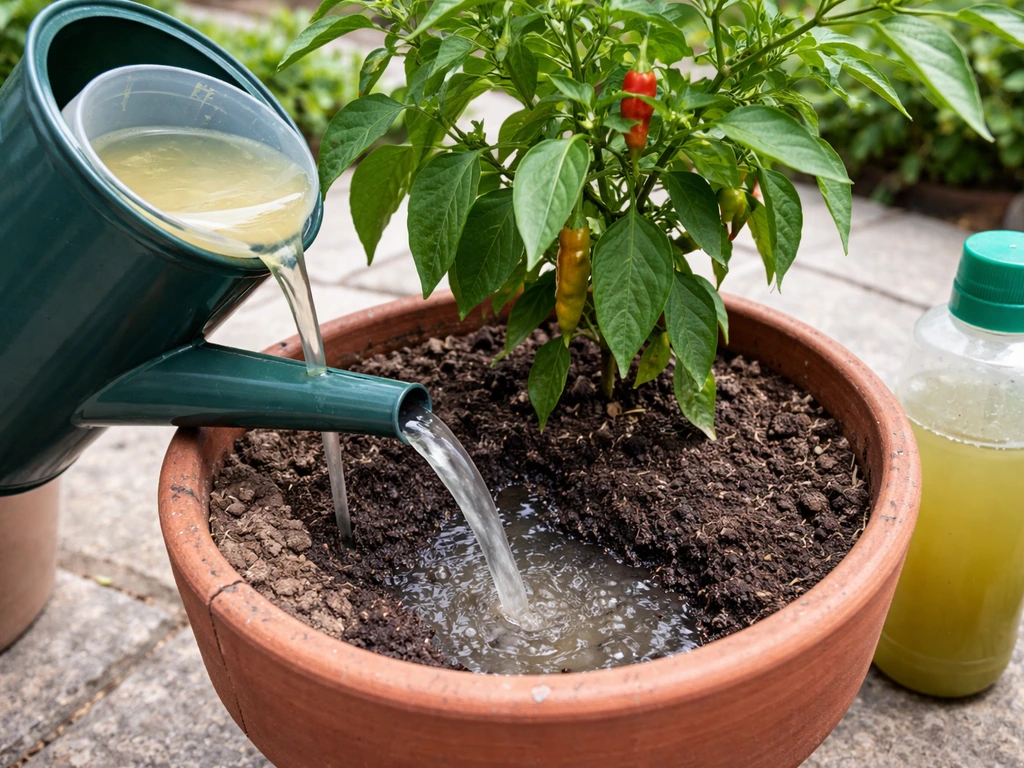
Consistent moisture is crucial. The RHS flags that flower buds drop if plants get too dry, and blossom drop is one of the most common reasons outdoor chilli plants fail to set fruit. The goal is evenly moist compost or soil, not wet, not bone dry. A practical rule of thumb is to water every two days during warm spells, then check daily during heatwaves and ease off during prolonged cool, wet periods. Containers dry out faster than beds, so check those more often.
Feeding should shift depending on where the plant is in its growth stage. While plants are establishing and growing vegetatively, a balanced liquid feed works well. Once plants are in flower and starting to set fruit, switch to a high-potassium feed (a standard tomato feed is perfect) applied weekly. This shift from nitrogen-heavy to potassium-heavy feeding encourages more fruit and better ripening rather than lots of leafy growth.
Do not over-feed with nitrogen. Outdoors in the UK, lush leafy growth late in the season is the enemy of ripening. You want the plant's energy going into maturing its existing fruits, not producing new growth that will never ripen before the frosts arrive.
Outdoor protection and troubleshooting (cold, rain, flower drop, pests)
Dealing with cold snaps and rain
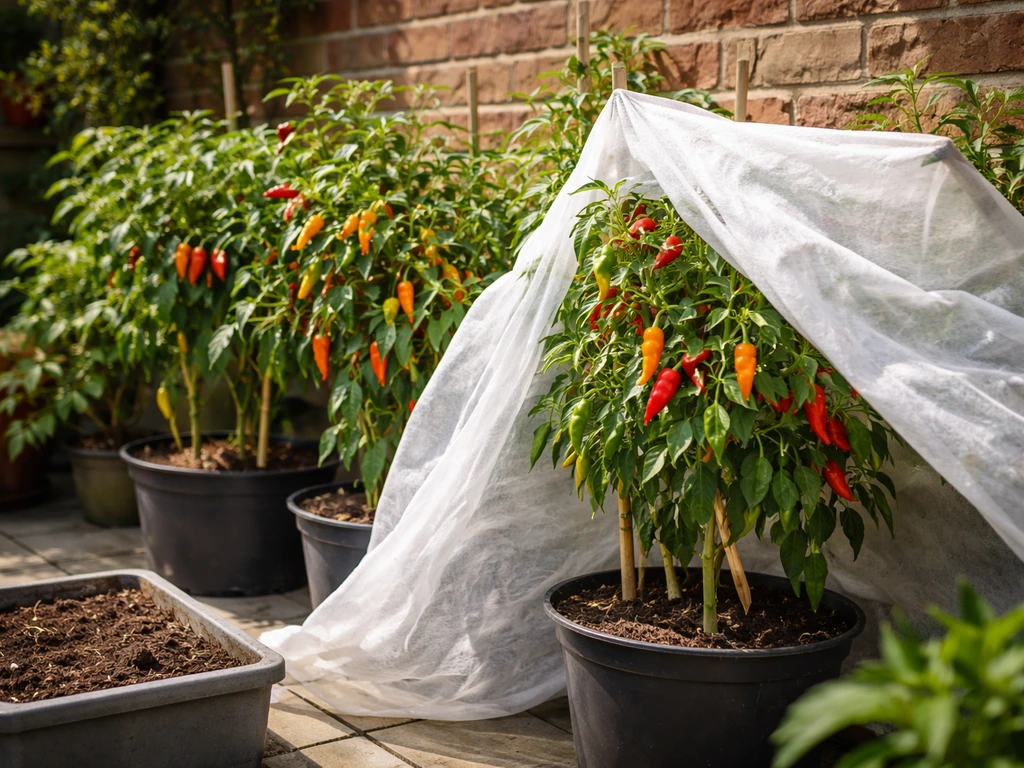
Even in summer, the UK can throw a week of cold, wet weather at you. Keep a roll of horticultural fleece within reach from the moment you put plants outside until at least mid-September. If overnight temperatures are forecast to drop below 10°C, cover plants. A cloche or a simple fleece tent held up by canes works well for container plants. For plants growing against a wall, a single layer of fleece draped over them at night and removed in the morning makes a real difference over the course of a season.
Extended wet, cool spells are harder to manage. If rain is relentless, move containers under the eaves of a building or into a cold frame during the worst of it. Waterlogged roots cause the same stress as drought and can trigger flower drop just as effectively.
Flower drop
Flower drop is almost always caused by one of three things: temperatures that are too cold (especially at night), soil that has dried out, or not enough light. If you are seeing buds falling before they open, check all three. Move the plant to a warmer spot, water more consistently, and if it is in a shaded corner, relocate it. Outdoor pollination is usually handled fine by wind and insects in the UK, so that is rarely the problem if conditions are otherwise good.
Pests to watch for
Outdoors, aphids are the main pest to look out for, particularly on young growth and around flower buds. Check plants regularly and knock aphids off with a strong jet of water or use an organic soap spray. Slugs can be a nuisance in wet summers, particularly around the base of container plants or in mulched beds. Keep the area around plant stems clear and use slug controls if needed. Whitefly and spider mites are more of a greenhouse problem, but in a warm sheltered spot you can occasionally see them on outdoor plants too.
Planning the season: harvest strategy and what to do if it's a short year
Pick fruits regularly, even if you want them red.
As September arrives, take stock of what is left on the plant. If you have a lot of green fruits and the forecast is turning cool, you have a decision to make. If the plant is in a container, bring it inside to a warm, bright room or conservatory to let fruits ripen off the plant's own reserves. If it is in the ground, you can either pull the whole plant and hang it upside down in a cool, dry shed (the fruits will continue to ripen this way), or pick all the green fruits and ripen them indoors on a warm windowsill. The upside-down hanging method, where you cut the entire stem and hang it, works surprisingly well for finishing off a batch of nearly-ripe fruits in a cool September.
In a genuinely poor year (cold, wet summer with little sun), be realistic. Your early-maturing varieties will still have produced some fruit. Your longer-season varieties may mostly be green by the time October arrives. That is not a failure, it is just the UK. Green chilli sauce, fermented green chillies, and pickled green jalapeño-style preparations are all excellent outcomes from an imperfect season. Plan for it rather than being surprised by it.
If you want to extend your options further, it is worth knowing that chillies can be overwintered as plants if kept frost-free. Cut them back hard in autumn, keep them on a warm indoor windowsill through winter, and they will come back much earlier the following spring with a head start on fruiting. This is a particularly useful trick in the North and Scotland, where you lose so much of the season to establishment each year. A second-year plant in a warm spot can produce significantly earlier than a seedling.
If chillies have caught your interest in what else can be pushed in UK outdoor conditions, the same site covers related challenges like growing aubergines outside in the UK and whether warm-season crops like okra are realistic here, plus what to grow in autumn UK. The logic is similar: microclimate, variety selection, and early starts are the tools you have to work with.
FAQ
What should I do if my chillies are flowering but they never ripen outdoors in the UK?
If temperatures are often below about 12°C at night, focus on early-maturing, small-to-medium-fruited types and expect a shorter harvest window. If your first ripe fruits are consistently late, it usually means you started seedlings too late rather than a “bad variety” issue, so the first fix is to move sowing earlier (or buy the earliest-maturing young plants available).
Can I just fertilize more to get chillies to ripen faster?
Avoid high nitrogen feeds after flowering begins, and do not remove flowers or buds to “help the plant focus.” Instead, switch to a potassium-forward feed (like a tomato feed) and keep the plant in the warmest position you can, for example against a south-facing wall, with fleece protection on nights below 10°C.
Is it worth bringing chillies outside during the day and into cover at night?
Yes, but only if the plants are already established and you can control night temperatures. Move pots into a cold frame or porch with light, not a dark shed, because low light can cause bud drop. Also reduce watering slightly indoors to prevent waterlogged compost.
How can I tell the difference between normal flower drop and a problem outdoors?
Chillies naturally drop some flowers in cool, cloudy spells. If you see buds dropping repeatedly, check three things in order: night temperatures (fleece or cloche if below 10°C), soil moisture consistency (especially in containers), and light exposure (a shaded corner often triggers drop).
My plants look healthy but small, will they still produce chillies outdoors in the UK?
If your seedlings are small when you plant them out, do not “catch up” with extra nitrogen. Use a balanced feed only lightly while they establish, then shift to potassium once flowers start. Also confirm you planted at the correct spacing, because overcrowding increases competition and reduces ripening.
Are super-hot chillies (like 7 Pots) completely unrealistic outdoors in the UK?
For outdoor UK growing, the best indicators for choosing varieties are days to maturity from transplanting and compact fruiting habit, not just heat level on the packet. Super-hot varieties can work only when they are very early or you have a significantly warm microclimate plus very early sowing.
What is the biggest mistake people make with watering container chillies outdoors?
Use a container size that prevents quick drying, 10 to 12 litres is a realistic minimum for productive plants. Then manage watering by checking the compost, not by a calendar, because containers can dry out dramatically faster during bright windy weather.
Does pot size make a noticeable difference for outdoor chillies?
Larger pots tend to stay evenly moist and buffer temperature swings, which reduces bud drop. If you must use a small pot, you will need more frequent checks and earlier protection from cold nights, otherwise flowers may drop before fruit sets.
Why do my chillies look fine in summer but stall in late season?
If you are growing in-ground in a frost-pocket or low spot, the cold air pooling will slow growth even if it looks “warm enough” by day. The practical fix is to use raised beds or choose a slope or wall-side position, and still keep fleece available for late cold snaps.
What’s the best strategy for ripening chillies when September turns cool and wet?
Start with the earliest-maturing varieties and plan for a “two-stage” approach: first aim to get most fruits to green, then prepare for ripening help in September. If a cool forecast hits, bring containers under cover immediately, and for plants in the ground consider picking near-ripe fruits for indoor finishing.
Is overwintering outdoor chillies really worth it for the North of England or Scotland?
Yes, overwintering can be a major advantage because the second-year plant is already established and will start fruiting earlier. The key is keeping it frost-free and bright over winter, then harden it back off slowly in spring so it does not shock outdoors.
When should I start watching for pests like aphids outdoors?
Begin checking for aphids as soon as plants are outside or even during the last part of hardening off. Quick action matters because aphids cluster on new growth and flower buds, and heavy infestations can delay fruit set even if the plants recover later.
Should I leave the chillies on longer to improve flavour, or pick regularly?
If you want to harvest earlier, pick fruit regularly once it starts to ripen, even if you pick a bit before perfect colour. Regular picking signals ongoing productivity, and it reduces the risk that the plant holds onto too many near-ripe fruits during a cool period.
What Can You Grow in the UK? Easy Plant List and Guide
Learn what you can grow in the UK, with climate tips, easy plant list, and how to match crops to sun, soil, and frost.